
How to Choose a Reliable Seat Cover Manufacturer for Your Business
How to Choose a Reliable Seat Cover Manufacturer for Your Business
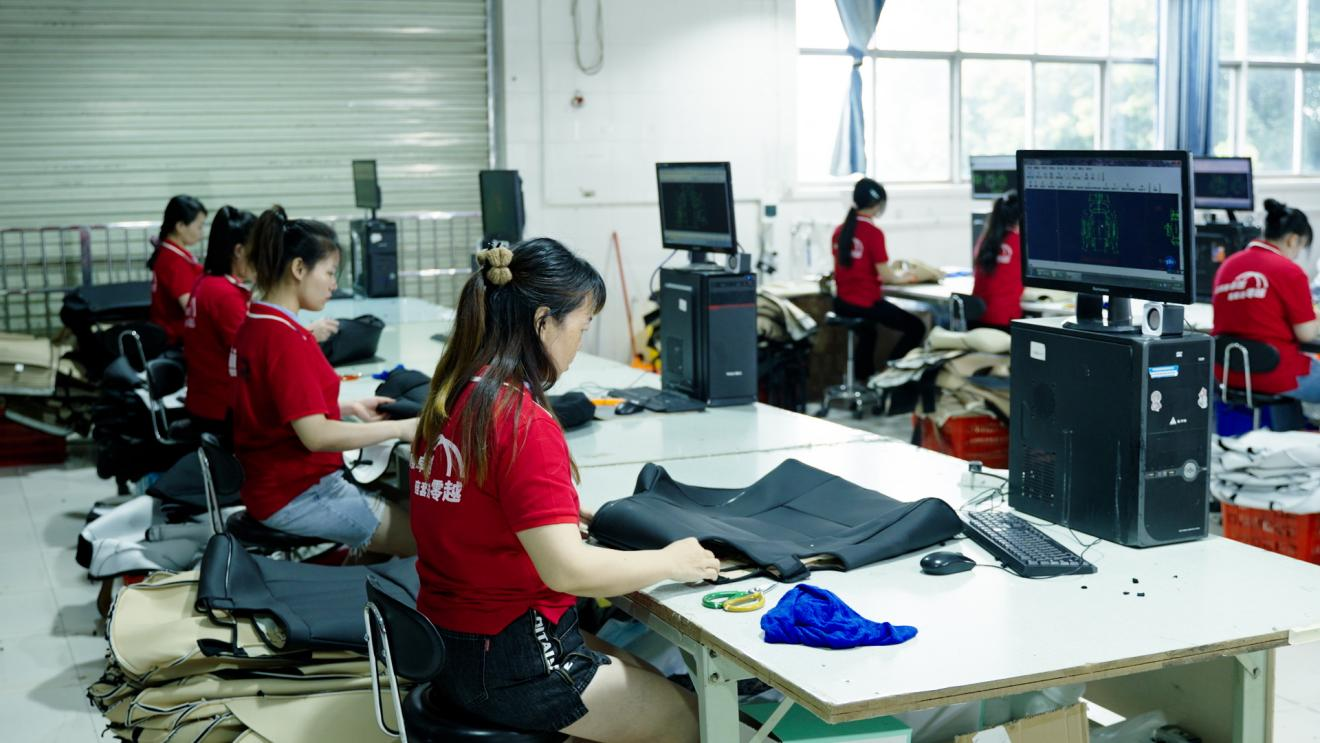
Choosing a reliable seat cover manufacturer is not simply about finding the lowest quotation. For B2B buyers, the supplier you choose can directly affect installation efficiency, return rates, inventory risk, customer satisfaction, and long-term margins.
A manufacturer may produce an attractive sample yet struggle with bulk-order consistency. Another may offer competitive pricing but lack accurate vehicle patterns, stable material sourcing, or reliable after-sales support.
The best approach is to evaluate the manufacturer as a complete supply partner. You need to review fitment, materials, production capability, quality control, commercial terms, compliance documentation, and technical support before increasing order volume.
This guide explains how to compare seat cover manufacturers step by step and identify a supplier that can support your business as it grows.
1. Define Your Business Requirements First
Start with your own requirements before comparing factories.
A manufacturer cannot recommend the right product if your target market, vehicle coverage, quality level, and order model are unclear.
Define these points first:
- Target customers
- Target vehicle categories
- Sales channels
- Expected order volume
- Target price range
- Required fitment level
- Material requirements
- Branding requirements
- Packaging requirements
- Expected lead time
Using the same specification for every shortlisted supplier also makes quotations easier to compare.
Match the Product to Your Customer Type
Different B2B buyers need different product characteristics.
Automotive customization shops usually care most about precise fit, premium appearance, installation speed, and profit per installation.
Fleet and rental companies often prioritize durability, easy cleaning, repeatable installation, and predictable replacement cost.
Automotive interior distributors need broad vehicle coverage, stable batch quality, flexible customization, and reliable replenishment.
Trading companies usually need clear specifications, export documentation, predictable production schedules, and consistent communication.
Retail chains need standardized packaging, accurate labeling, and stable supply.
Dropshipping and e-commerce sellers need accurate vehicle compatibility and strong SKU control because one wrong shipment can lead to a complete refund.
The right manufacturer should match your business model rather than simply offer the widest catalog.
Choose the Right Fitment Level
Seat covers generally fall into three fitment categories.
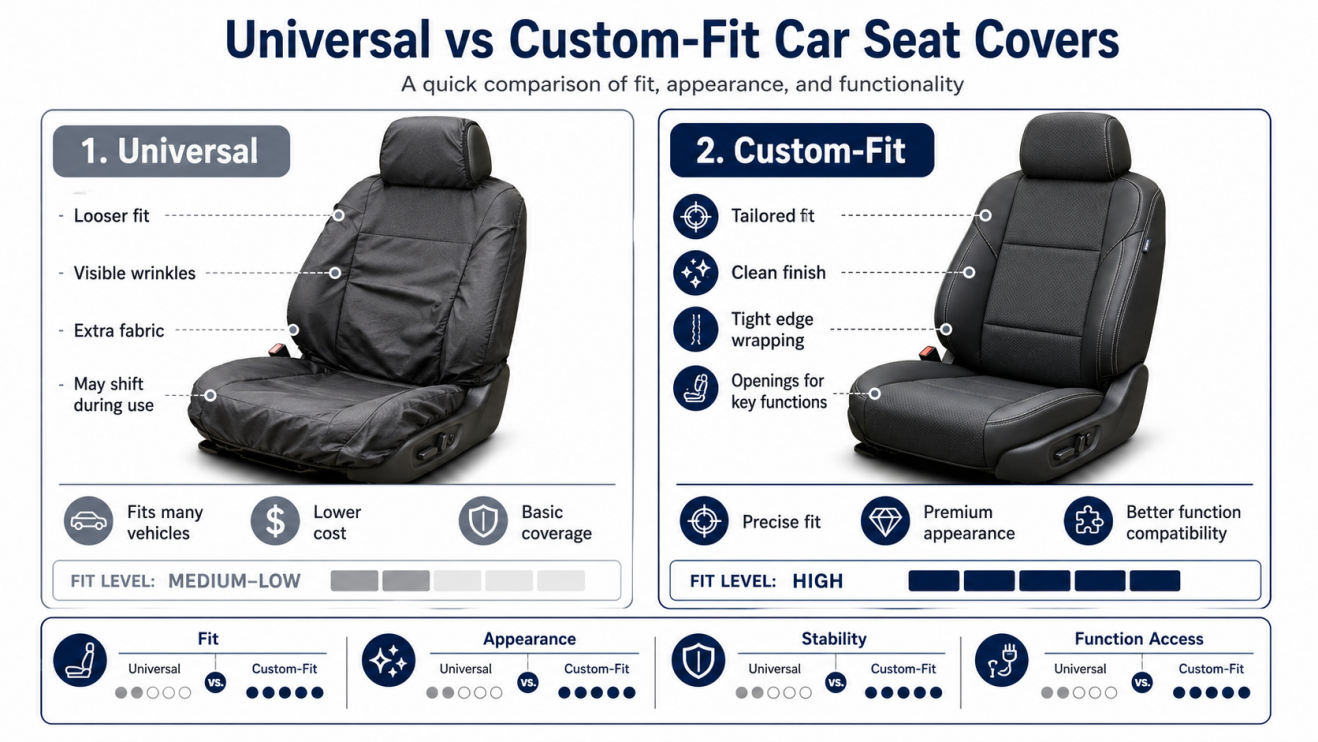
Universal fit works across many vehicles but usually provides limited contour accuracy. It is more suitable for price-driven retail channels.
Semi-custom fit uses broader seat-shape families. It can improve coverage but may still compromise around headrests, controls, armrests, or rear-seat configurations.
Fully custom fit is developed around a specific vehicle or seat configuration. It normally provides the strongest option for higher-value B2B programs.
|
Fitment Type |
Fit Accuracy |
Typical Cost |
SKU Complexity |
Best For |
Main Limitation |
|
Universal Fit |
Low |
Low |
Low |
Mass retail and price-driven programs |
Loose areas and limited vehicle-specific coverage |
|
Semi-Custom Fit |
Medium |
Medium |
Medium |
Mid-range retail and broad vehicle coverage |
May not match complex seat features precisely |
|
Fully Custom Fit |
High |
Higher |
High |
Premium dealers, customization shops, fleets, and vehicle-specific e-commerce |
Requires accurate pattern data and stronger SKU management |
For premium B2B programs, fully custom-fit products often provide the strongest balance of appearance, installation accuracy, and product differentiation.
Select Materials Based on the Application
Material selection should support the intended customer and selling price.
Premium Nappa-style materials can work well for automotive shops and distributors selling higher-end interior upgrades.
Synthetic leather may offer a stronger balance between appearance, durability, maintenance, and cost.
Neoprene can be useful for fleets, work vehicles, outdoor-use customers, and applications where practical protection matters more than a luxury finish.
Ask for clear material specifications, including:
- Thickness
- Surface finish
- Backing
- Flexibility
- Color consistency
- Cleaning requirements
- Available test data
For repeat B2B orders, batch consistency matters as much as the first sample.
2. Check the Manufacturer’s Automotive Experience and Capacity
A strong sample does not prove that a manufacturer can support your business at scale.
You need to verify relevant automotive experience, available capacity, vehicle coverage, and control over key production processes.
Review Automotive Manufacturing Experience
Custom automotive seat covers are more complex than general sewn products.
Modern vehicle seats can include:
- Power controls
- Integrated seat belts
- Headrests
- Armrests
- Side bolsters
- Split rear seats
- Folding mechanisms
- Seat-mounted airbags
A manufacturer with relevant experience should understand that vehicle make and model are often not enough to confirm fitment.
The supplier may also need the model year, trim, seat configuration, headrest design, rear-seat layout, and interior photos.
This verification helps reduce wrong-pattern production and after-sales claims.
Evaluate Available Production Capacity
Ask about available capacity rather than theoretical factory capacity.
Useful questions include:
- What is your normal monthly output?
- How much capacity is currently available?
- How many lines produce seat covers?
- Can you handle mixed-model orders?
- What happens if our volume doubles?
- How does peak season affect lead time?
A factory may claim a large monthly output while most of that capacity is already committed to other customers.
Check Which Processes Are In-House
Ask which steps the manufacturer controls directly.
These may include:
- Pattern development
- Cutting
- Sewing
- Embroidery
- Inspection
- Packaging
Outsourcing is not automatically a problem. What matters is whether the supplier can maintain control over specifications, timing, and quality.
Review Vehicle Model Coverage
Pattern coverage directly affects how quickly you can expand a vehicle-specific product catalog.
Ask:
- How many vehicle patterns are available?
- Which North American vehicles are covered?
- How are different trims handled?
- How often are patterns updated?
- How quickly can a new model be developed?
If your business focuses on pickup trucks, SUVs, commercial vehicles, or another specific category, review that category separately.
3. Evaluate Custom-Fit and 3D Pattern Capabilities
Fitment should be one of your highest-weighted supplier criteria.
A premium material cannot compensate for a seat cover that looks loose, blocks controls, or requires excessive installation time.
How Are New Vehicle Patterns Developed?
Look for a repeatable, vehicle-specific development process.
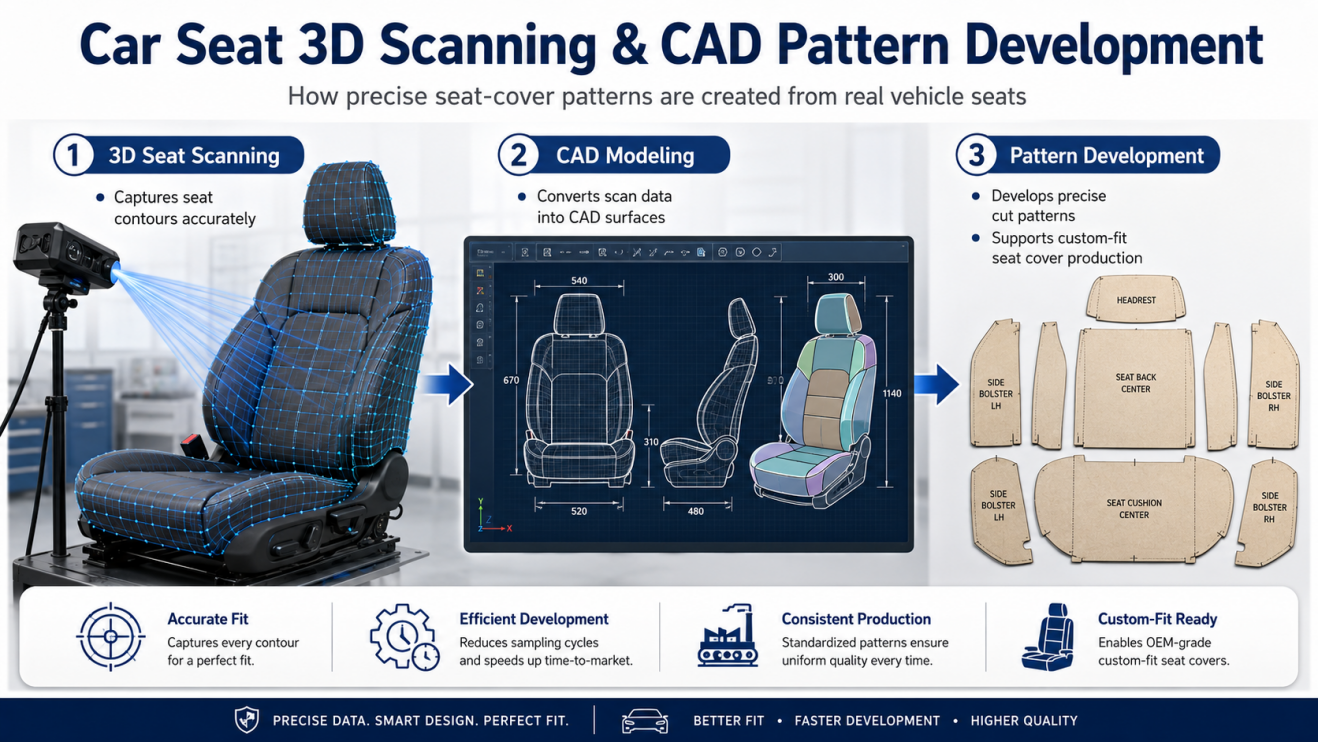
A structured process may include:
1. Vehicle measurement
2. 3D scanning
3. CAD pattern development
4. Prototype sewing
5. Real-vehicle installation
6. Pattern correction
7. Final approval
3D scanning for automotive interiors# can help capture complex seat contours that are difficult to reproduce through basic manual measurement alone.
The technology itself is not enough. Pattern engineers also need to understand material stretch, foam thickness, seam allowance, and installation tension.
A digital pattern should still be validated on the actual vehicle whenever practical.
Check Complex Seat Areas
Weak patterns often become obvious around complicated seat features.
Inspect:
- Headrests
- Armrests
- Seat controls
- Integrated belts
- Rear folding sections
- Cup holders
- Child-seat anchor access
- Storage pockets
- Side-airbag areas
Ask for installed photos or videos showing these areas clearly.
Flat product images are not enough to evaluate custom fit.
Look for an OEM-Like Result
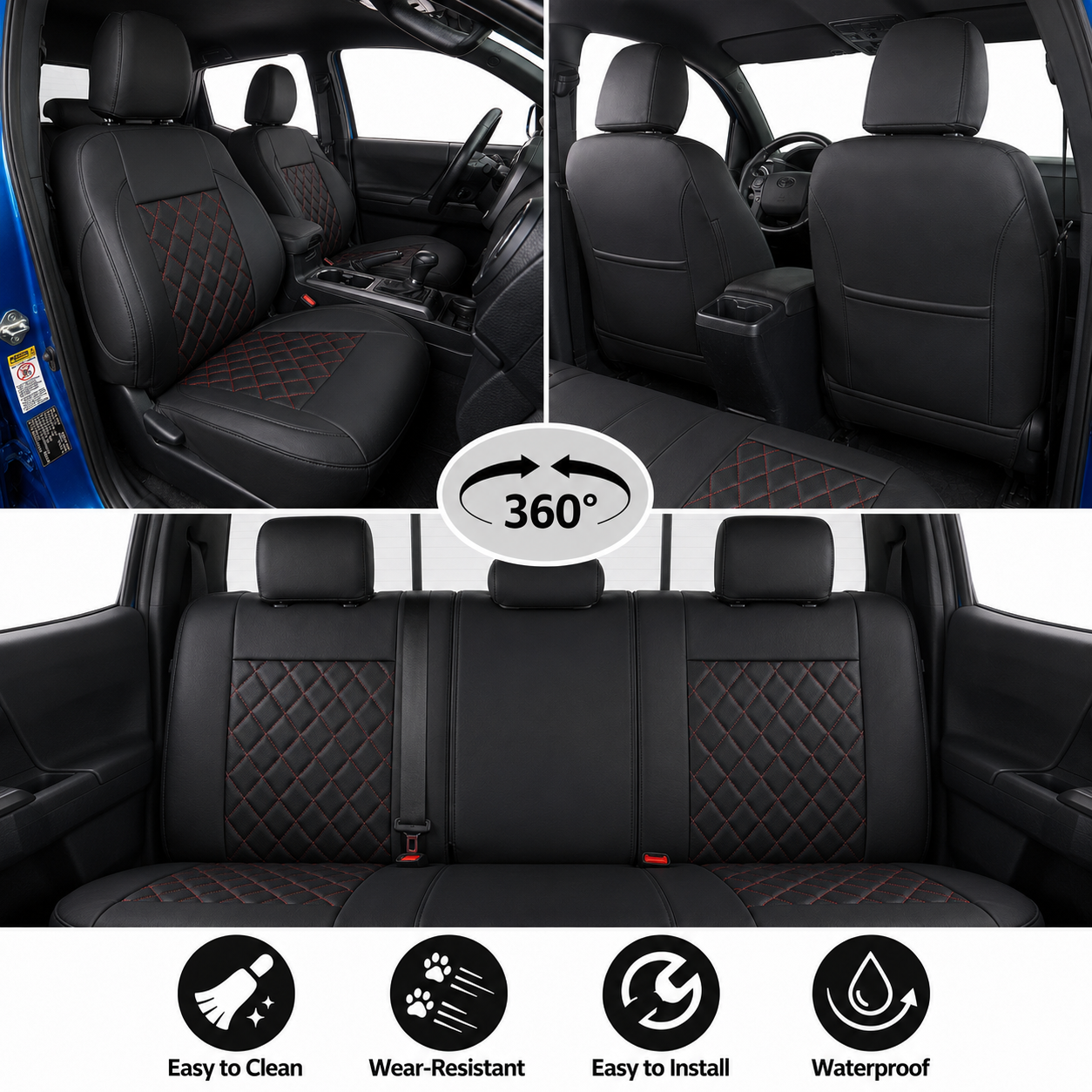
A well-developed seat cover should follow the original seat contour naturally.
Look for:
- Minimal wrinkles
- Defined bolsters
- Aligned seams
- Tight headrest coverage
- Clean functional openings
- Stable fastening
- Consistent driver/passenger symmetry
For customization shops, this affects perceived value and installation margin.
For fleets, it affects labor time and maintenance.
For online sellers, it affects reviews and return rates.
How Can You Verify “3D Fit” Claims?
Ask for evidence, then test the product yourself.
Useful evidence includes:
- Vehicle-specific installation photos
- Installation videos
- Pattern-development examples
- Physical samples
If custom fit is central to your product positioning, test more than one vehicle model before approving a long-term supplier.
4. Inspect Material Quality and Craftsmanship
Evaluate the complete construction rather than relying on a material name.
Two suppliers may both quote “Nappa” or “Neoprene” while offering very different quality levels.
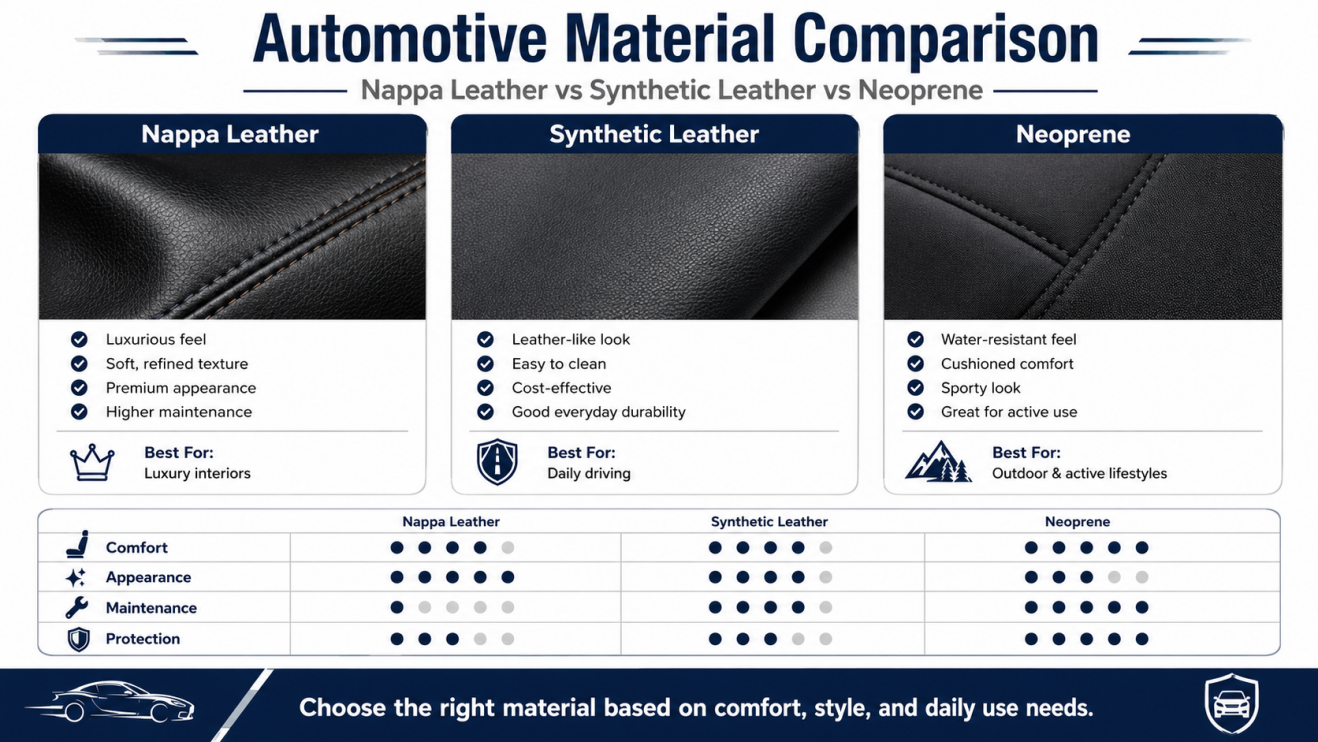
Compare Materials Side by Side
For leather-style materials, check:
- Hand feel
- Grain
- Thickness
- Flexibility
- Surface gloss
- Backing
- Odor
- Color consistency
For Neoprene, check thickness, elasticity, lamination, surface fabric, edge finishing, and seam construction.
|
Material |
Look and Feel |
Durability |
Maintenance |
Typical Positioning |
Best B2B Applications |
|
Nappa-Style Leather |
Soft, refined, premium |
Medium to High |
Easy to Moderate |
Premium |
Automotive customization shops, interior dealers, premium retail |
|
Synthetic Leather |
Clean, versatile, cost-efficient |
Medium to High |
Easy |
Mid-Range to Premium |
Distributors, retailers, private-label programs |
|
Neoprene |
Flexible, sporty, protective |
High |
Easy |
Practical and Performance-Focused |
Fleets, rental vehicles, work vehicles, outdoor-use markets |
Material choice should be based on your customer, selling price, climate, maintenance expectations, and desired positioning rather than on the material name alone.
Inspect Stitching and Reinforcement
Look closely at:
- Stitch spacing
- Seam straightness
- Thread tension
- Panel alignment
- Reinforced areas
- Loose threads
- Edge finishing
Pay extra attention to armrest openings, corners, folding sections, and fastening points.
These areas often experience more tension during installation and daily use.
Check Internal Construction
Ask to see the layers underneath the visible surface.
The product may include:
- Surface material
- Foam
- Fabric backing
- Reinforcement
- Anti-slip layers
These layers affect comfort, flexibility, durability, and final fit.
Control Batch Consistency
Keep an approved reference sample for repeat orders.
Use it to control:
- Material
- Color
- Texture
- Stitching
- Fitment
- Accessories
This “golden sample” gives both buyer and supplier a clear production reference.
5. Review the Quality Control Process
Quality control should prevent problems during production rather than simply discover them before shipment.
A reliable manufacturer should be able to explain what is checked at each stage and how defects are corrected.
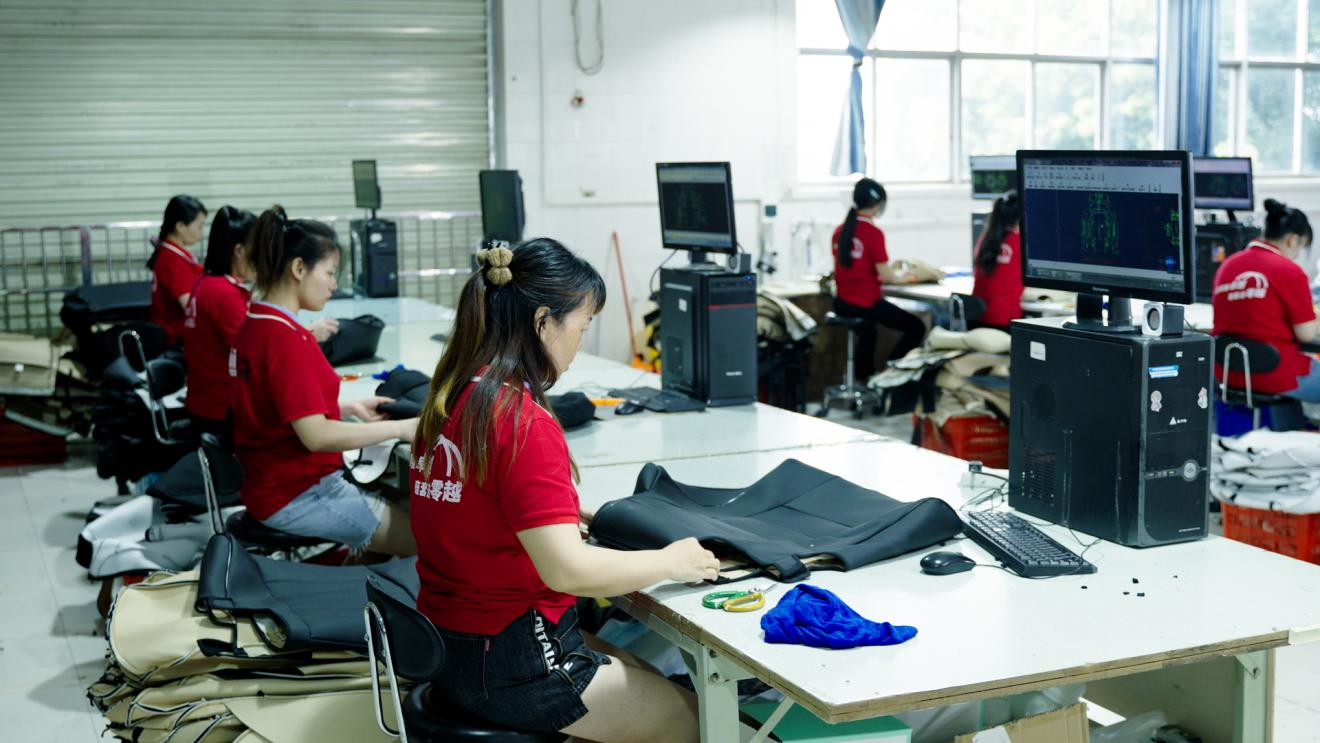
Incoming Material Inspection
Incoming inspection may cover:
- Surface material
- Foam
- Backing
- Thread
- Hooks
- Buckles
- Elastic
- Other accessories
Important checks include color, thickness, surface condition, and material lot consistency.
In-Process Inspection
QC should continue during:
- Pattern selection
- Cutting
- Sewing
- Assembly
- Accessory installation
This is particularly important for vehicle-specific products because one wrong pattern file can affect an entire production batch.
Final Inspection
Before packing, the supplier should verify:
- SKU
- Vehicle application
- Material
- Color
- Stitching
- Accessories
- Labels
- Packaging
Mixed-model orders require particularly strong SKU control.
For larger orders, buyers may also use the Acceptable Quality Limit (AQL)# as part of pre-shipment inspection.
Validate New Patterns
New vehicle patterns should ideally be installed and checked before bulk production.
The same approach is useful after:
- Pattern revisions
- Major material changes
- Construction changes
- Repeated fitment complaints
How Should a Factory Handle Repeated Defects?
The factory should correct the root cause, not only replace the product.
If several buyers report the same loose section, the supplier should review the vehicle configuration, pattern version, production process, and installation result.
The corrected pattern should then replace the older version in future production.
Create Your Own Quality Specification
A simple buyer specification can reduce disputes.
|
Area |
Requirement |
|
Material |
Type, code, color, approved sample |
|
Fitment |
Vehicle, year, trim, configuration |
|
Stitching |
Color, style, position |
|
Accessories |
Type and quantity |
|
Branding |
Logo and placement |
|
Packaging |
Labels and inserts |
|
QC |
Inspection requirements |
|
Approval |
Golden sample |
Written specifications are especially useful for customized programs.
6. Verify Safety and North American Market Documentation
Do not accept broad claims such as “fully compliant” without understanding what they mean.
Seat covers can interact with vehicle controls, seat belts, folding mechanisms, child-restraint access points, and seat-mounted airbags.
Review Side-Airbag Design
Ask:
- How is the relevant airbag area constructed?
- Does the design change by vehicle model?
- Is supporting testing or validation available?
- Does the documentation match the actual product?
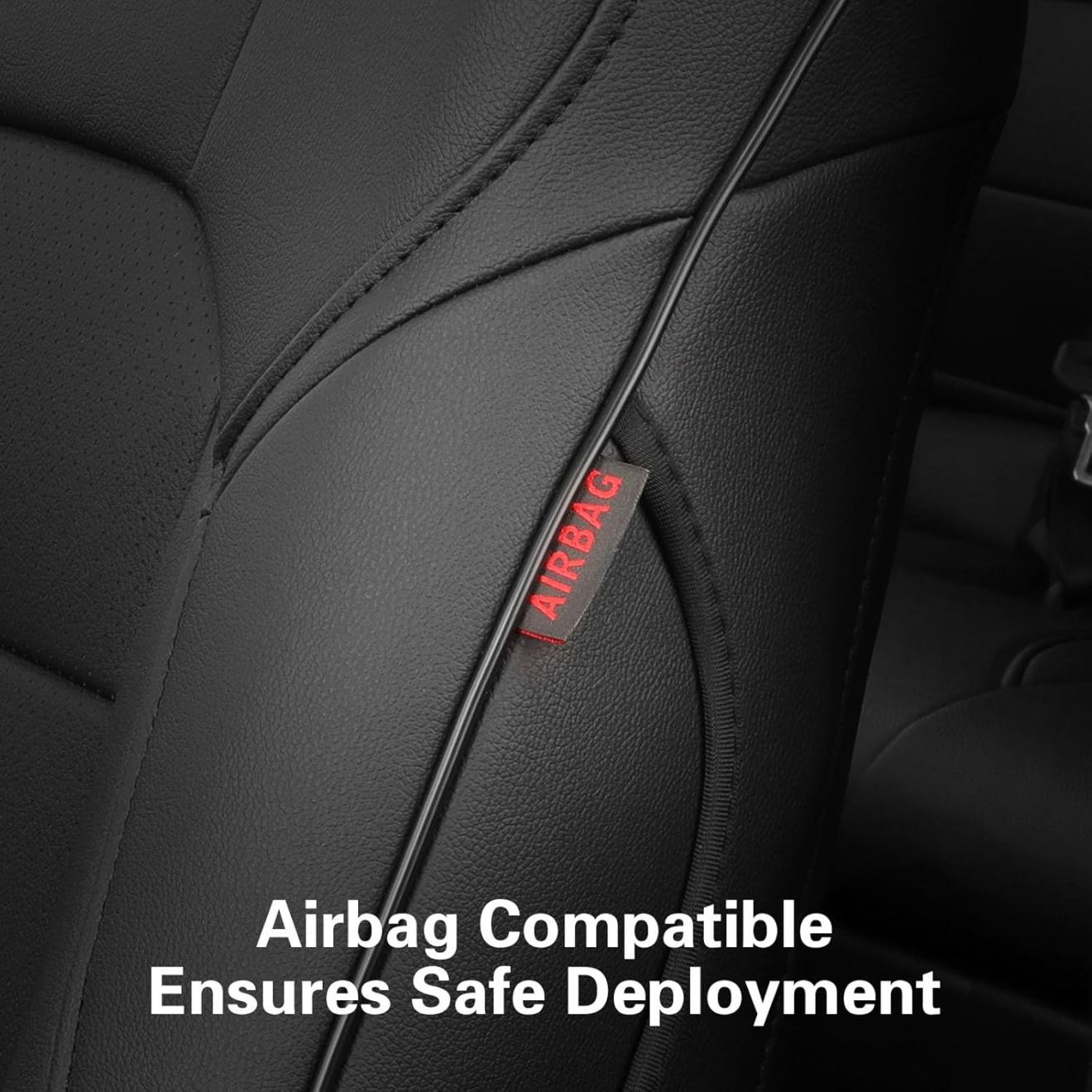
An “AIRBAG” label alone does not prove that the construction has been properly considered.
If the vehicle has seat-mounted side airbags, the cover design should account for relevant seat-mounted side airbag guidance# and the actual deployment area.
How Should You Review Test Reports?
Confirm that the report matches the product you plan to buy.
Check:
- Product
- Material
- Construction
- Test method
- Test date
- Laboratory
- Result
A report for one material or construction should not automatically be treated as evidence for every variation.
Review Material and Flammability Documentation
Ask which tests are available and whether they match your intended product and destination market.
For multilayer products, confirm whether the tested specimen represents the complete construction rather than only the visible surface.
Where applicable, buyers may want to review FMVSS 302 flammability requirements# when evaluating automotive interior materials for the U.S. market.
Avoid Unsupported Approval Claims
Be cautious with marketing phrases such as:
- Government Approved
- NHTSA Approved
- DOT Approved
- Fully Certified for North America
The supplier should be able to explain the exact basis for any regulatory claim.
Separate U.S. and Canadian Requirements
Do not treat North America as a single regulatory market.
If you sell in both the United States and Canada, maintain separate requirement checklists and review relevant Canadian Motor Vehicle Safety Regulations# where applicable.
Retailers, distributors, and marketplaces may also impose additional supplier standards.
Maintain a Product Compliance File
For important SKUs, keep:
1. Product specifications
2. Material specifications
3. Vehicle compatibility records
4. Relevant test reports
5. Installation instructions
6. Warnings
7. QC records
8. Revision history
This makes future audits and product changes easier to manage.
7. Test Samples Before Placing a Bulk Order
Do not approve mass production from catalog images.
A physical sample helps you evaluate real fitment, material quality, installation time, and craftsmanship.
[Image: Technician Installing and Testing a Vehicle-Specific Seat Cover — Suggested search: “custom car seat cover installation fitment test”]
Use the Exact Vehicle
Whenever practical, test the exact:
- Make
- Model
- Model year
- Trim
- Seat configuration
A similar vehicle may still have different bolsters, controls, headrests, or rear-seat layouts.
Inspect the Product Before Installation
Confirm:
- All components are included
- Materials match the specification
- Stitching is clean
- Labels are correct
- Hooks and straps are complete
- Instructions are available
This helps separate manufacturing problems from installation errors.
Measure Installation Time
Record:
- Total labor time
- Number of installers
- Special tools required
- Adjustment time
- Problem areas
For B2B buyers, this converts fitment quality into a measurable operating cost.
Test Seat Functions
After installation, check:
- Seat movement
- Reclining
- Folding
- Headrests
- Armrests
- Seat belts
- Rear-seat split functions
- Other relevant controls
If the cover sits near child-restraint anchor points, make sure it does not restrict access to the vehicle’s LATCH child restraint system#.
Use the Product in Real Conditions
Sit in the seat and use the vehicle normally if possible.
After repeated entry and exit, check whether:
- The cover moves
- Wrinkles increase
- Straps loosen
- Seams shift
A product that looks good immediately after installation may behave differently after several days.
Keep the Approved Sample
The preferred process is:
Specification → Sample → Installation Test → Revision → Approval → Production
Do not skip sample approval simply to meet a short production schedule.
8. Evaluate Customization and Private-Label Capabilities
Customization can improve product differentiation, but every additional option creates another variable that must be controlled.
A strong supplier should explain how customization affects fitment, cost, MOQ, and lead time.
Review Available Customization
Common options include:
- Materials
- Colors
- Stitching
- Quilting
- Piping
- Perforation
- Foam
- Logos
- Packaging
Request physical samples for important materials and colors.
Digital renderings may not accurately represent the finished product.
Check Material Changes Against Existing Patterns
Different materials stretch and compress differently.
A pattern designed around thin synthetic leather may not perform identically with a thicker multilayer Nappa-style material.
Ask whether major material changes are tested before bulk production.
Review Branding Options
Common branding methods include:
- Embroidery
- Debossing
- Woven labels
- Rubber badges
- Branded packaging
Confirm logo position on an installed sample rather than approving only a flat digital mockup.
Understand White Label and OEM Development
White label normally means adding your brand to an existing product.
OEM development may involve changes to materials, patterns, colors, construction, or packaging.
Choose the model that matches your expected volume and differentiation strategy.
Check Customization MOQ
Ask separately about MOQ for:
- Standard colors
- Custom colors
- Special materials
- Logos
- Packaging
- New patterns
A factory may offer a low production MOQ while its material or packaging supplier requires a higher minimum.
Review New-Model Development Capacity
If your business depends on vehicle-specific products, engineering capacity matters.
A reliable process should follow:
Vehicle Data → Pattern Development → Prototype → Installation → Revision → Approval
Ask how many new vehicle models the engineering team can realistically develop each month.
9. Review MOQ, Lead Time, and Supply Capacity
Commercial flexibility can affect inventory risk as much as unit cost affects gross margin.
Evaluate MOQ and replenishment speed together.
Understand MOQ by SKU
Ask for:
- MOQ per model
- MOQ per color
- MOQ per material
- Mixed-order MOQ
For distributors, a lower MOQ per vehicle model can sometimes be more valuable than a small price reduction.
Can Different Vehicle Models Be Mixed?
Yes, if the manufacturer’s production system supports mixed-SKU orders.
Mixed ordering can reduce inventory risk and allow you to launch a broader catalog with less working capital.
|
Buyer Type |
Preferred MOQ Strategy |
Inventory Priority |
Lead-Time Priority |
Key Supplier Requirement |
|
Automotive Customization Shop |
Low MOQ across multiple models |
Low inventory, broad coverage |
Fast |
Mixed-SKU flexibility and precise fitment |
|
Automotive Interior Distributor |
Medium MOQ across popular SKUs |
Balanced inventory |
High |
Stable replenishment and broad model coverage |
|
Fleet Operator |
Higher MOQ for fewer vehicle models |
Standardized inventory |
High |
Consistent quality and repeat production |
|
Rental Company |
Medium to High MOQ by fleet model |
Replacement stock |
High |
Durability and fast repeat orders |
|
Trading Company |
Flexible MOQ based on customer orders |
Project-based |
Medium to High |
Documentation, stable production, export support |
|
Dropshipping Seller |
Very low MOQ or one-piece fulfillment |
Minimal inventory |
Very High |
SKU accuracy and fast fulfillment |
The best MOQ is not necessarily the lowest one. It is the MOQ that lets you maintain enough vehicle coverage without creating unnecessary inventory risk.
Start With a Trial Order
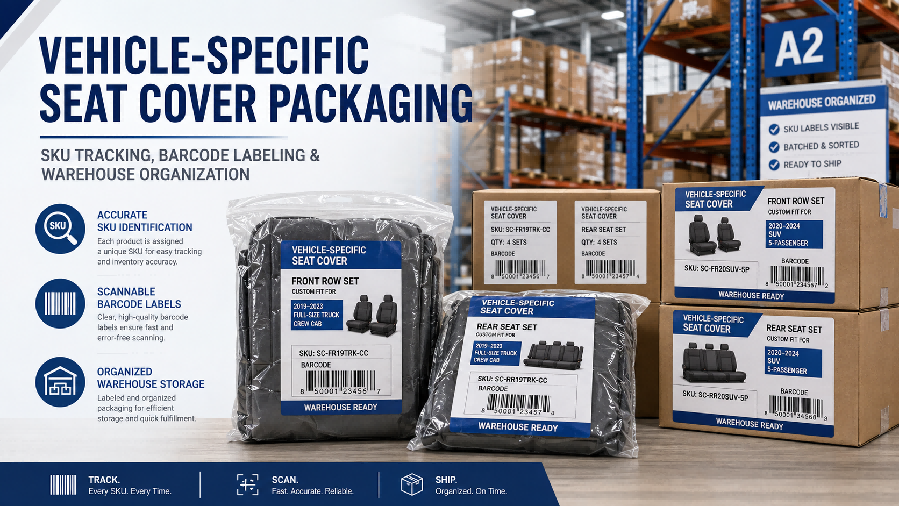
A trial order lets you evaluate:
- Batch consistency
- Label accuracy
- Packaging
- Production lead time
- QC
- Communication
A sample shows whether the factory can make one good product. A trial order shows whether it can repeat that result.
Separate Lead-Time Stages
Ask for separate timelines for:
- New pattern development
- Sampling
- Sample revision
- Material preparation
- Mass production
- Shipping
Also confirm exactly when production lead time begins.
Review Repeat-Order Lead Time
Repeat orders should normally be easier once patterns, materials, and packaging have been approved.
Ask how quickly proven SKUs can be replenished.
Include Logistics in Your Reorder Plan
Your real replenishment cycle includes:
Production + QC + Packing + Export + Freight + Customs + Local Delivery
When sourcing internationally, compare landed cost# rather than factory price alone.
Use the full replenishment cycle when planning inventory.
10. Compare Total Cost, Not Unit Price
The lowest quotation is not necessarily the lowest-cost supplier.
A better comparison includes installation, defects, returns, freight, inventory, and support.
Include Installation Labor
Consider this example.
Supplier A
· Product Cost: $75
· Installation Time: 120 Minutes
Supplier B
· Product Cost: $82
· Installation Time: 60 Minutes
At a labor cost of $40 per hour:
· Supplier A Installed Cost: $155
· Supplier B Installed Cost: $122
The product with the higher factory price can still provide a lower total installed cost.
Include Defect and Return Costs
A fitment return may involve:
· Customer-service time
· Return freight
· Inspection
· Replacement product
· Replacement shipping
· Refund processing
These costs should be tracked instead of treated as isolated customer-service events.
Calculate Expected Quality Cost
A simple formula is:
Defect Rate × Average Cost per Defect
If a 4% defect rate costs $80 per case:
0.04 × $80 = $3.20 per unit
At a 1% defect rate:
0.01 × $80 = $0.80 per unit
At higher volumes, this difference becomes significant.
Include Inventory Cost
High MOQ can create:
· Storage cost
· Working-capital pressure
· Slow-moving inventory
· Model-year obsolescence
A more flexible supplier may be more profitable even if its unit price is slightly higher.
Use a Total Cost Model
|
Cost Category |
What to Include |
|
Product |
Factory price |
|
Freight |
International and local shipping |
|
Installation |
Labor |
|
Defects |
Expected quality loss |
|
Returns |
Processing and freight |
|
Warranty |
Replacement cost |
|
Inventory |
Storage and working capital |
|
Stockouts |
Lost sales and urgent freight |
|
Support |
Staff time |
The better metric is cost per successfully sold and installed set, not simply price per set.
11. Evaluate Communication and After-Sales Support
A good supplier should make technical problems easier to solve.
This becomes increasingly important as your catalog and order volume grow.
Judge Response Quality
Fast answers are useful, but accurate answers are more valuable.
If you ask whether a cover fits a specific trim, the manufacturer should verify the configuration instead of simply replying, “Yes, no problem.”
Check Technical Escalation
The sales team does not need to know every engineering detail.
It does need access to:
- Pattern engineers
- QC staff
- Production managers
This helps resolve technical problems faster.
Confirm Specifications in Writing
Before production, document:
- Vehicle
- Pattern version
- Material
- Color
- Stitching
- Branding
- Packaging
- Quantity
- Delivery target
Product codes are generally safer than broad descriptions such as “premium black leather.”
Request Production Updates
For larger orders, request updates when:
- Materials arrive
- Cutting begins
- Sewing begins
- QC is completed
- Goods are packed
- Shipment is booked
Early visibility makes production delays easier to manage.
How Should Fitment Claims Be Handled?
The supplier should investigate the cause before proposing a solution.
Ask:
- What evidence is required?
- Who reviews the claim?
- Can individual components be replaced?
- How are pattern errors corrected?
- How quickly can replacements be produced?
A clear claim process protects both buyer and supplier.
Review Installation Support
Useful resources may include:
- PDF instructions
- Installation photos
- Videos
- Vehicle-specific guides
- QR-based tutorials
Good documentation can reduce installation errors and customer-service workload.
12. Watch for Manufacturer Red Flags
One warning sign may have a reasonable explanation.
Several warning signs together usually indicate higher sourcing risk.
Vague Material Claims
Descriptions such as “Luxury Leather” or “Premium Nappa” are not enough.
Ask for material specifications, codes, and samples.
No Real Fitment Evidence
A custom-fit manufacturer should be able to show products installed on real vehicles.
Flat product photos do not demonstrate pattern accuracy.
No Clear Pattern-Development Process
The factory should be able to explain how new patterns are created, tested, and revised.
One Pattern Covers Too Many Vehicles
This can be normal for universal products.
It is a warning sign when the product is positioned as a precise vehicle-specific cover.
No Sample Process
A manufacturer that pushes for bulk production before sample approval increases your risk.
Production Differs From the Approved Sample
Watch for unexpected changes in:
- Material
- Color
- Foam
- Stitching
- Accessories
- Fitment
These differences may indicate weak process control.
Unapproved Material Substitution
A supplier should obtain approval before changing an agreed material or construction.
Unrealistically Low Pricing
If one quotation is far below comparable offers, compare the exact specification.
Savings may come from thinner materials, weaker accessories, or reduced QC.
Unrealistically Short Lead Times
Ask how the shorter schedule is achieved.
A realistic schedule that the factory consistently meets is more useful than an aggressive promise that changes after payment.
Generic Certificates
Check whether every document actually relates to the product you are buying.
A large certificate folder has little value if the reports do not match the current material or construction.
Weak After-Sales Terms
If the manufacturer cannot explain how it handles defects and replacement parts before you order, resolving future claims may be difficult.
13. Use a Manufacturer Evaluation Scorecard
A scorecard prevents price from dominating the final decision.
Compare every shortlisted supplier using the same criteria and supporting evidence.
Product and Fitment
Review:
- Vehicle-specific pattern capability
- Real installation results
- Installation efficiency
- Material quality
- Stitching
- Functional compatibility
Factory and Quality
Review:
- Automotive manufacturing experience
- Available capacity
- In-house processes
- QC procedures
- Traceability
- Corrective action
- Pattern validation
Commercial Terms
Review:
- MOQ
- Mixed-SKU flexibility
- Sample cost
- Lead time
- Repeat-order speed
- Shipping options
- Warranty terms
Supplier Service
Review:
- Communication
- Technical support
- Sample revision
- Installation resources
- Claim handling
- New-model support
A structured supplier scorecard should combine fitment, quality, delivery, commercial terms, and supplier quality management# rather than relying on price alone.
Weight the Criteria
A practical B2B scorecard may use:
|
Category |
Weight |
|
Fitment Accuracy |
20% |
|
Material and Craftsmanship |
15% |
|
Quality Control |
15% |
|
Safety and Documentation |
10% |
|
Production Capacity |
10% |
|
MOQ and Commercial Flexibility |
10% |
|
Lead Time and Delivery |
10% |
|
Communication and Support |
10% |
Adjust the weighting to your business model.
A customization shop may give more weight to fitment and materials. A fleet buyer may prioritize capacity, durability, and delivery reliability.
14. Understand Why Premium Fitment Matters to Your Business
Fitment affects much more than appearance.
It can influence labor cost, returns, pricing, customer satisfaction, and long-term B2B relationships.
Better Fit Reduces Installation Time
If precise fitment saves 20 minutes per installation, 300 vehicles save:
100 Labor Hours
That can directly improve capacity for automotive shops, dealers, fleets, and rental companies.
Better Fit Reduces Returns
Fitment complaints commonly involve:
- Wrinkles
- Loose panels
- Incorrect openings
- Rear-seat compatibility
- Difficult installation
More accurate vehicle data and stronger patterns reduce these risks.
Better Fit Supports Premium Pricing
A high-value seat cover needs visible differences from a generic product.
Better contour, cleaner seam alignment, precise openings, and stable installation make premium pricing easier to justify.
Better Fit Protects B2B Relationships
A dealer or installer that repeatedly receives difficult products may stop ordering.
Consistent fitment helps protect relationships with distributors, installers, fleets, and retailers.
Track Fitment by SKU
Record fitment claims by vehicle model rather than grouping every issue together.
|
Vehicle |
Orders |
Fitment Claims |
Claim Rate |
|
Model A |
500 |
5 |
1.0% |
|
Model B |
300 |
18 |
6.0% |
|
Model C |
450 |
3 |
0.7% |
Model B clearly requires further investigation.
A useful improvement cycle is:
Sell → Collect Data → Identify Problem → Revise Pattern → Retest → Update Production
15. Ask the Right Questions Before Choosing a Manufacturer
Use the same questions with every shortlisted supplier.
Then compare both the answers and the evidence behind them.
How Do You Develop Vehicle Patterns?
Look for a documented vehicle-specific development process.
A strong answer should explain:
- Vehicle data collection
- Measurement or scanning
- CAD development
- Prototype production
- Installation testing
- Revision
Also ask whether the exact trim and seat configuration were validated.
Can You Provide an Installed Sample for My Exact Vehicle?
Yes, request one whenever practical.
Review:
- Seat bottom
- Backrest
- Headrests
- Armrests
- Controls
- Rear seats
- Overall alignment
An exact-vehicle sample is far more useful than a sample from a “similar” model.
What Materials Do You Offer?
Ask for specifications and samples, not only material names.
Request:
- Material codes
- Physical samples
- Color codes
- Thickness
- Backing
- MOQ
- Stock status
This makes future repeat orders easier to control.
What QC Checks Do You Perform?
Look for quality control throughout production.
A strong answer should cover:
- Incoming material inspection
- Cutting
- Sewing
- Assembly
- Final inspection
- Packing
Also ask what happens when an item fails inspection.
What Are Your MOQ and Lead Times?
Ask for SKU-level MOQ and stage-by-stage timelines.
Confirm:
- MOQ per SKU
- Mixed-SKU requirements
- Sample lead time
- New-pattern lead time
- Bulk-production time
- Repeat-order time
This gives you a more realistic supply plan.
How Do You Handle Fitment Problems?
Choose a supplier with a clear investigation and correction process.
Ask:
- What information is required?
- Who reviews the issue?
- Can individual components be replaced?
- Can patterns be revised?
- How quickly can replacements be produced?
What Capacity Is Available to My Business?
Ask about available capacity, not maximum factory output.
You need to know whether the supplier can support your forecast without compromising quality or lead time.
What North American Market Experience Do You Have?
Relevant experience can reduce sourcing risk, but evidence still matters.
Ask about:
- Vehicle coverage
- Previous B2B programs
- Documentation
- Packaging
- Safety-related product considerations
How Do You Support New Vehicle Launches?
Look for a repeatable engineering process and realistic development capacity.
Ask how quickly the factory can measure, develop, test, and approve a new pattern.
Can You Trace a Finished Product?
Yes, reliable B2B production should have practical traceability.
A useful system can connect the finished product to:
- Production date
- Pattern version
- Material lot
- Purchase order
This makes quality investigations much faster.
Conclusion
Choosing a reliable seat cover manufacturer is ultimately a B2B risk-management decision.
You are not only buying a product. You are selecting a factory that can influence your installation cost, inventory level, return rate, delivery reliability, and customer experience.
Five areas deserve particular attention before you increase order volume:
1. Vehicle-specific fitment
2. Material and craftsmanship consistency
3. Quality control
4. Commercial flexibility and lead time
5. Technical and after-sales support
For premium custom-fit programs, fitment deserves particular attention. Accurate 3D pattern development, vehicle-specific validation, and controlled production can reduce problems throughout the supply chain.
When evaluating manufacturers such as EKR, the useful question is not simply whether the factory can make a seat cover. It is whether the manufacturer can reproduce the same fit, material quality, and workmanship across different vehicle models and repeat production runs.
Start with a clear specification. Request the exact sample. Test the installation. Review the documentation. Place a controlled trial order.
Then increase volume only after the manufacturer has shown that it can deliver the same result consistently.
For a B2B buyer, that consistency is what turns a good seat cover into a reliable supply program.


